

Construction Site Security in Houston: Preventing Equipment & Material Theft
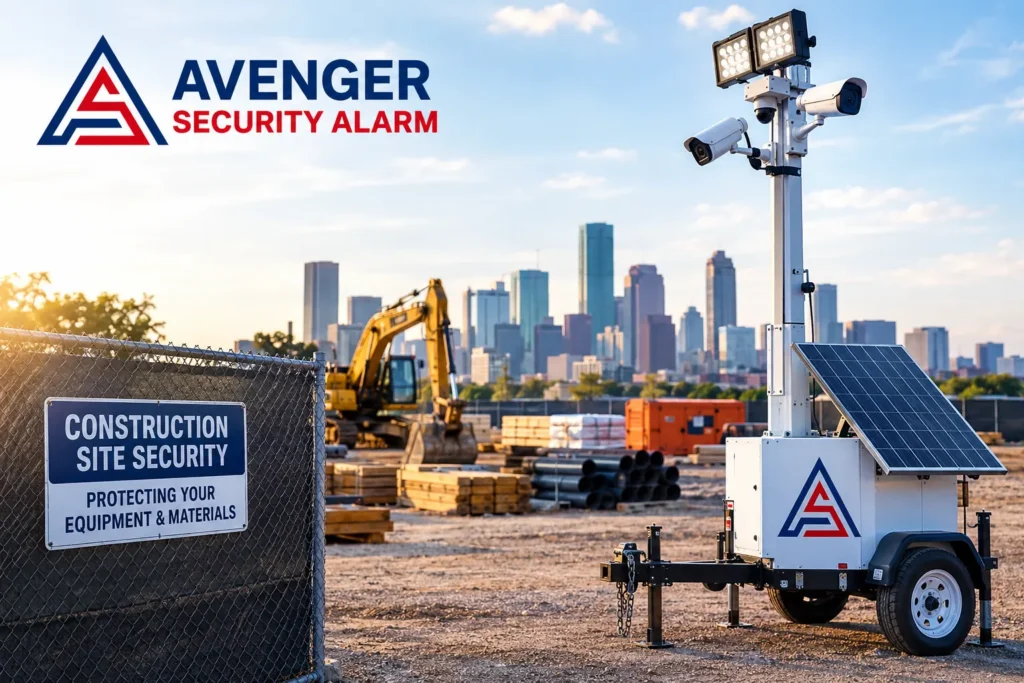
Houston is a busy building market, with its benefits coming with a negative side. Active builds are left sitting in Katy to Pearland after dark, filled with tools, generators, heavy equipment and piles of materials. Construction site security is no longer a nice-to-have item on the general contractors’ and developers’ list. It restricts the margins and schedules directly.
Why Houston Job Sites Attract Thieves
With its growth, extensive road infrastructure, and constant development, Houston is a crime haven. A lot of projects are located on the outskirts of urban development, away from pedestrian traffic, but near major streets where it is easy to quickly escape the project. Include a healthy market for selling tools and machinery and the incentive is clear. That’s the loss that is caused by weak construction site security.
Equipment theft is the headline problem. You can load and unload the skid steers, mini excavators, generators and trailers in minutes. Materials, too, are as vulnerable. Staged and new wire pulled in commercial and industrial buildings can be worth thousands of dollars and easy to sell as scrap, making copper wire theft a recurring problem. Other items like lumber, HVAC systems, appliances and fuel are often sold as well.
There is more to the true cost than replacement value. Scheduling delays, deductibles, increased premiums and, in some contracts, penalties for missed milestones are caused by theft. It is estimated that the cost of construction theft in the U.S. reaches the hundreds of millions of dollars annually, and many thefts, if any, are never reported.
Why Permanent Systems Fall Short
Hardwired security systems are created for completed buildings. The construction site, on the other hand, is the opposite: changes to the perimeter, late arrival of power and internet, and changes in the layout with each phase. It’s not feasible to give the same cable for a system that won’t be needed in a month’s time. Therefore, it is necessary to take a different approach to the construction site security than would be taken for a finished warehouse or office.
Temporary and Mobile Monitoring Options
These are taken care of by temporary security cameras. They are put in place in hours, secured to poles, light towers or existing structures and moved to a different location if the project migrates. This eliminates the need to wait for the utilities or network drop because there is cellular connectivity.
Solar-powered cameras extend that flexibility. There is no need to trench, no need to fuel a generator, and they can be set in any location where there is maximum risk, like a laydown yard, fuel storage or far corner of a lot. Although Houston’s sunshine assists, be sure to inquire about the battery’s backup capabilities during a few cloudy days, as a Gulf coast storm system can stick around.
A mobile surveillance trailer is the best option for larger projects or projects that pose a higher risk. These are all-in-one self-contained units that include a number of cameras, speakers, floodlights and a power source, all mounted on a tall mast and packaged in a towable unit. One mobile surveillance trailer may cover multiple acres and many potential thieves are deterred from getting onto the fence by the sight of the trailer.
Live Monitoring Beats Recording Alone
Only cameras that record help investigations; they do not stop a crime in progress. The best construction site monitoring is a combination of cameras with AI capabilities for motion detection and a live team of operators. An operator can check the threat and, if necessary, warn an intruder using on-site speakers and call the police. A quick response can be the difference between a scare and a loss – seconds, not minutes. The best construction site security is when there is someone there watching. Professional alarm monitoring can provide another layer of protection by ensuring alerts are reviewed and appropriate action can be taken when suspicious activity is detected.
A Practical Checklist for Protecting Your Site
The best use of technology is in a multi-layered plan. Trusted and robust jobsite theft prevention is a mix of physical, procedural, and electronic:
- Lighting: Provide light to entrances, laydown areas and equipment parking to allow activity to be visible from the street.
- Perimeter control: Employ strong fencing, with only one locked entry point and it is logged and monitored.
- Equipment tracking: Identify GPS tracking devices on large equipment, as well as recover faster and claim insurance by recording equipment serial numbers and taking photos.
- Smart staging: Optimize deliveries of copper and other high-value material with just-in-time delivery and secure the rest in secured containers.
- Key and access discipline: Do not leave keys in machines overnight and maintain workers and deliveries sign-in log.
- Parking strategy: Cluster equipment tightly, remove attachments, and block access with larger machines.
- Community coordination: Co-ordinate information from the incident with neighbouring sites and local enforcement.
For broader jobsite safety guidance, contractors can also review OSHA’s construction safety recommendations.
Choosing a Provider in Houston
Local conditions matter. Poor hardware will fail due to heat, humidity, and hurricane season; find enclosures that are weather-resistant and a strategy to move or protect units before the storm arrives. Inquire about cell coverage, night vision capabilities and whether cameras can see license plates at your gate distance.While construction projects require temporary protection, the same approach to layered security can also be applied to permanent home security systems once a property is completed.
Equally, inquire about the handling of alerts, such as who checks the feed, within how many minutes do police get alerted and what evidence you are provided after. Don’t evaluate construction site security efforts based on the number of cameras, only response time when comparing vendors. Flexibility is also important, as projects seldom end on time, and terms that are monthly will be appreciated.
Last but not least, consider the cost with respect to one incident. The cost of a stolen excavator or pulled run of wire can add up to months of service fees — not to mention downtime. One big loss on the jobsite is nearly always more expensive than good jobsite theft prevention.
Protect the Build Before Thieves Find It
Houston continues to expand and so do the thieves that prey on projects without security. The best time to plan construction site security is before the first delivery arrives, not after the first construction site theft. When paired with a well-trained personnel response team and site discipline, temporary security cameras aren’t just a device to safeguard equipment; they’re a way to save your time, your money, and your reputation with clients.
When installing a new Houston project, incorporate construction site security as part of your pre-construction plans and ask for a site assessment to ensure optimal combination of hardware and monitoring for your site.
FAQ
1. Why is construction site security important in Houston?
Construction sites often contain expensive equipment, tools, building materials, and copper wiring before a project is completed. Construction site security helps deter unauthorized access, identify suspicious activity, and give contractors better visibility after working hours.
2. How do temporary security cameras work on construction sites?
Temporary security cameras can be installed at different areas of a jobsite without requiring a permanent camera system. Depending on the site, cameras may use wireless connectivity, cellular communication, batteries, or solar power. They can be moved as the construction project progresses.
3. Can security cameras help with jobsite theft prevention?
Yes. Cameras can support jobsite theft prevention by monitoring entrances, storage areas, equipment zones, and material staging areas. Visible surveillance may also discourage unauthorized activity, while recorded footage can help provide useful information if equipment or materials go missing.
4. What is a mobile surveillance trailer for construction sites?
A mobile surveillance trailer is a portable security unit designed for temporary locations. It can combine cameras, lighting, communication equipment, and other monitoring technology in one movable setup. This makes it useful for large construction sites or projects where security needs change during different phases of construction.
5. Are solar-powered cameras suitable for construction sites?
Solar-powered cameras can be a practical option for jobsites where running permanent electrical wiring is difficult or temporary. They can provide monitoring in areas such as equipment yards, remote sections of a project, and material storage zones. The right setup depends on the site’s layout, connectivity, power requirements, and monitoring needs.